


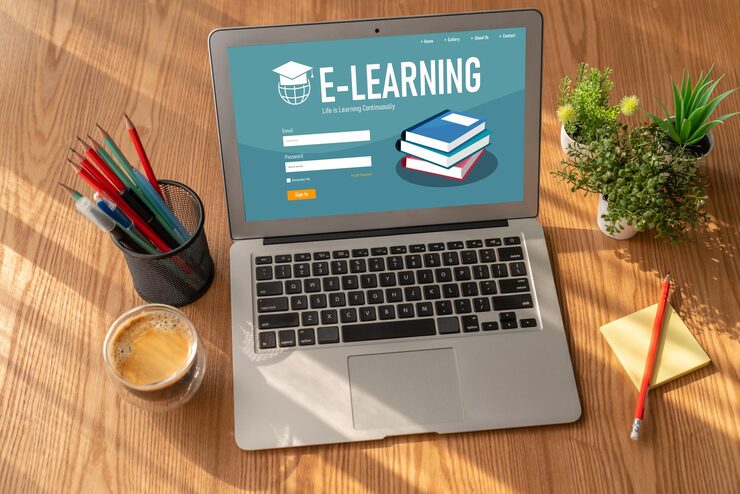
Education E-Learning Tools have completely reshaped the way students, professionals, and even hobbyists approach learning. In a world where flexibility and accessibility matter more than ever, these tools bring classrooms to laptops, smartphones, and even gaming consoles. From schools and universities to corporate training programs, e-learning has become an essential bridge between knowledge and learners everywhere.
The rise of these tools mirrors the transformation seen in other industries. Just as streaming services changed how people watch movies or how cricket fans now check live scores on apps instead of newspapers, e-learning is disrupting education. The focus is no longer on static lessons but on dynamic, interactive learning experiences that adapt to different needs.
Why Education E-Learning Tools Are Transforming Learning
The most striking feature of Education E-Learning Tools is their ability to make education borderless. A student in India can learn coding from a professor in the U.S., while a business manager in Europe can attend leadership classes hosted in Asia. This mirrors the global reach of sports broadcasts, where fans can enjoy live matches from anywhere.
These tools also allow self-paced learning. Just as food lovers try quick recipes at their own convenience, learners can pause, rewind, or revisit lessons without feeling rushed. The control shifts from the teacher’s lecture schedule to the student’s personal pace, making education less stressful and more engaging.
Building Interactivity in Online Courses
Traditional classrooms often rely on face-to-face interaction, which is difficult to replicate online. However, e-learning platforms are filling this gap through interactive features. Virtual whiteboards, live chats, and discussion forums simulate the collaborative spirit of in-person sessions.
Consider multiplayer gaming as an example. Players work in teams, communicate strategies, and learn together in real time. E-learning applies the same concept, where students collaborate on projects, share ideas, and build knowledge collectively. The result is a learning journey that feels connected, not isolated.
In travel and sports too, interactivity makes experiences more memorable. A guided virtual museum tour or a fantasy cricket league keeps audiences engaged. Similarly, interactivity in e-learning ensures that learners feel part of an active community.
Personalization Through Smart Learning Systems
One of the biggest strengths of Education E-Learning Tools lies in personalization. Unlike traditional classrooms, where every student must follow the same speed, online platforms adapt to individual progress.
A student struggling with math can get more practice problems, while a fast learner can skip ahead. This resembles how streaming platforms like Netflix recommend movies based on previous choices or how social media apps curate feeds uniquely for each user.
The same principle applies to business training. A sales professional might need advanced negotiation modules, while a newcomer requires basic product knowledge. With personalized content, businesses save time, and learners achieve faster results.
Enhancing Learning with Multimedia
E-learning thrives because it combines text, video, audio, and even gamified elements. Instead of static PowerPoints, learners get engaging experiences through simulations, quizzes, and animations.
Sports fans, for example, enjoy highlight reels, commentary, and real-time stats that deepen their understanding of the game. Likewise, in education, visual and interactive elements simplify complex concepts. A student studying biology can watch a 3D animation of cell functions instead of struggling with abstract textbook descriptions.
The same technique is transforming culinary learning. Recipe platforms now include step-by-step video guides, making it easier for beginners to master dishes. E-learning borrows from this trend to keep learners motivated.
Accessibility and Flexibility Across Devices
One of the core advantages of Education E-Learning Tools is their availability across multiple devices. Whether on a desktop at home, a smartphone during travel, or even a tablet in a café, education is always within reach.
This flexibility resembles how courier services provide real-time tracking so customers stay connected wherever they are. In the same way, learners no longer need to be tied to physical classrooms or fixed schedules. Instead, they enjoy the freedom to learn while commuting, traveling, or managing busy workdays.
E-Learning in Professional and Corporate Training
The business world has embraced e-learning as a cost-effective and efficient solution for upskilling employees. From cloud solutions training for IT teams to leadership workshops for managers, e-learning ensures staff stay updated without disrupting daily operations.
Just as sports teams train consistently to stay ahead of competition, businesses use online courses to build stronger teams. Moreover, analytics provided by these tools help managers track progress, identify knowledge gaps, and design future training.
For instance, a courier company might use e-learning to train employees on updated logistics systems, while a gaming studio may teach its developers new coding frameworks through online modules. The adaptability of e-learning makes it relevant across industries.
Building Global Communities Through Education
Education no longer happens in isolation. E-learning platforms create global classrooms where students from diverse backgrounds share insights. This community-building mirrors the cultural exchange seen in travel, where meeting new people broadens perspectives.
In gaming, players often form international teams, collaborating across languages and time zones. E-learning follows the same path by fostering peer-to-peer discussions, mentorship, and networking opportunities. These connections often extend beyond the course itself, shaping careers and friendships.
The Role of Data Analytics in Improving Learning
Behind every e-learning platform lies data analytics. These insights track how learners interact with content, where they struggle, and what keeps them engaged.
This is similar to how news media uses analytics to understand audience behavior or how cricket franchises use performance data to fine-tune strategies. For education, it means continuous improvement in course design, delivery, and learner support.
By analyzing this data, educators can identify popular lessons, improve weak modules, and personalize the learning journey further. Students benefit from constantly evolving, learner-friendly experiences.
Future of Education E-Learning Tools
The journey of Education E-Learning Tools is just beginning. With artificial intelligence, virtual reality, and augmented reality becoming mainstream, online courses will soon look like immersive adventures. Students may explore historical sites in VR, practice science experiments in simulations, or attend classes with AI-powered tutors who adapt in real time.
This innovation is similar to how travel apps offer virtual previews, or how gaming has evolved into hyper-realistic environments. Businesses, too, will continue adopting these tools to create agile, future-ready teams.
Read also:
bangladesh national cricket team vs sri lanka national cricket team match scorecard
sri lanka national cricket team vs bangladesh national cricket team match scorecard
bangladesh national cricket team vs sri lanka national cricket team
faheem ashraf stats
dallas mavericks vs houston rockets match player stats
lakers vs golden state warriors match player stats
golden state warriors vs sacramento kings stats