
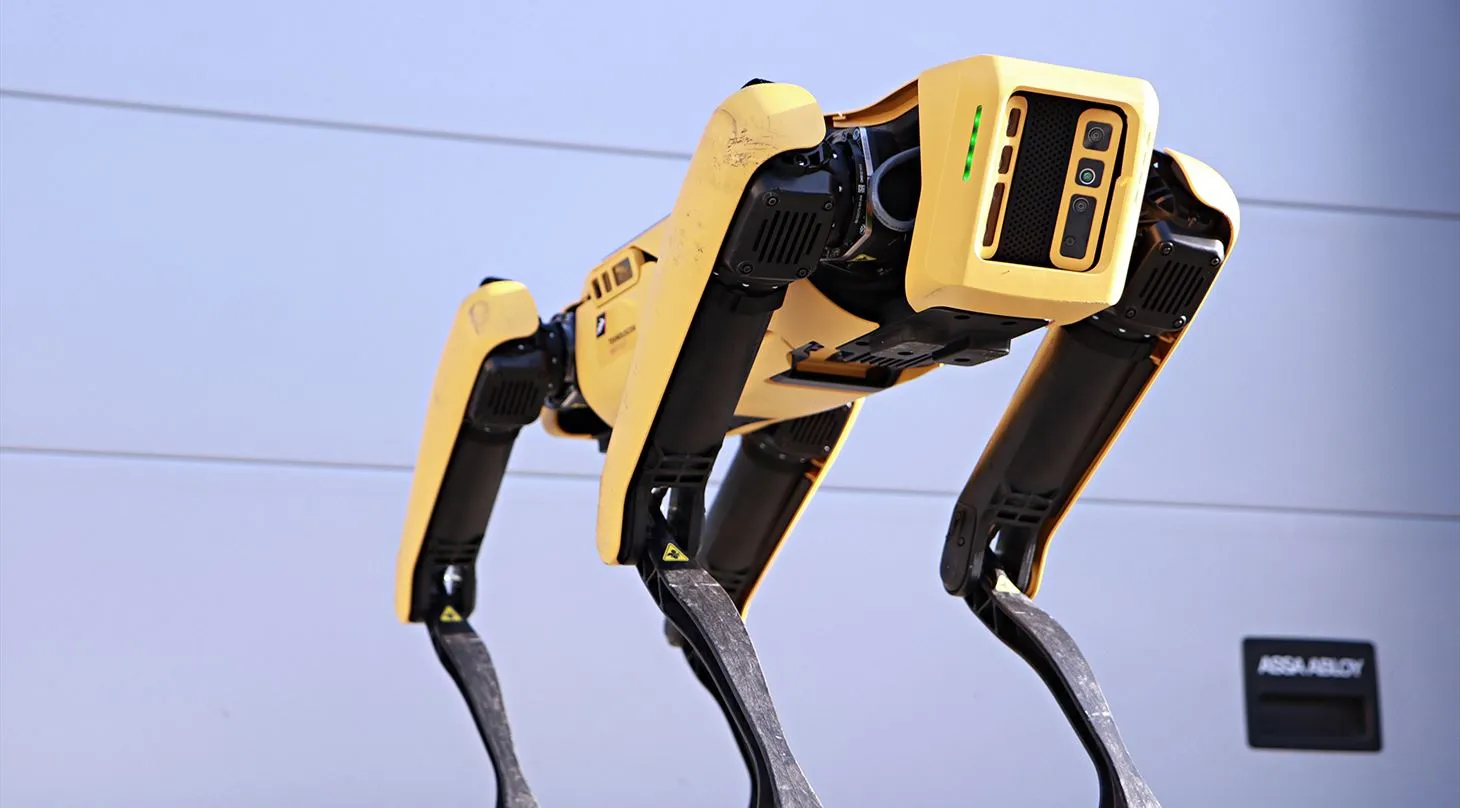
Autonomous Robotics has transitioned from the realm of science fiction into the very fabric of our daily lives, often operating quietly in the background of our most essential industries. Imagine walking through a high-tech hospital in the middle of the night. While the hallways are mostly silent, a sleek, knee-high machine glides effortlessly from the pharmacy to the intensive care unit. It doesn’t bump into walls, it waits patiently for the elevator, and it knows exactly which room requires a specific delivery. This isn’t a remote-controlled toy handled by a technician in a basement; it is a sophisticated machine making its own decisions in real-time. This level of independence is what defines the modern era of machines that can perceive, think, and act without a human tether.
The journey to this level of sophistication has been a marathon of incremental breakthroughs in sensors, computing power, and artificial intelligence. For decades, robots were mostly “dumb” machines, bolted to factory floors and programmed to repeat a single motion millions of times. If a human stepped into their path, the machine wouldn’t know to stop unless a physical safety switch was tripped. Today, the landscape is entirely different because we have moved into the age of situational awareness. These machines now use a combination of “eyes” and “ears” that are often more sensitive than our own, allowing them to navigate environments as chaotic as a busy sidewalk or a dense forest.
One of the most fascinating aspects of this field is the concept of Simultaneous Localization and Mapping, or SLAM. This is the mathematical magic that allows a robot to enter a room it has never seen before and build a digital map of it while simultaneously figuring out where it is within that map. Think about how you navigate your own home in the dark. You have a mental map of where the furniture is, and you use your sense of touch or a faint glimmer of light to orient yourself. Robots do this at a much higher frequency, processing thousands of data points per second to ensure they are exactly where they need to be. This foundational tech is what makes everything from self-driving cars to vacuum cleaners possible.
When we look at the core components of these machines, we find a trio of systems working in perfect harmony: sensing, processing, and actuation. The sensing layer involves LIDAR, cameras, and ultrasonic sensors that act as the primary inputs. The processing layer is the “brain,” where complex algorithms filter out the noise and identify objects like people, pets, or debris. Finally, the actuation layer is the physical movement—the wheels turning, the arms reaching, or the rotors spinning. The seamless integration of these three stages is why Autonomous Robotics feels so much more organic and “human-like” than the mechanical arms of the 1980s.
Autonomous Robotics in Agriculture and Food Security
The impact of this technology is perhaps most visible in the vast fields of modern agriculture. Farming has always been a profession of extreme labor and unpredictable variables, but self-navigating machines are changing the equation. In the past, a farmer might have to spray an entire crop with chemicals to kill weeds, even if the weeds were only present in small patches. Now, we have autonomous tractors and drones equipped with multispectral cameras that can identify a single weed among thousands of healthy plants. These machines can then apply a precise drop of herbicide or even use a laser to neutralize the weed, reducing chemical usage by over ninety percent in some cases.
This precision is not just about saving money; it is about environmental stewardship and the future of our food supply. As the global population grows, the demand for food increases while the amount of available arable land remains static. Self-operating machines allow for “round-the-clock” farming, where tractors can plant seeds or harvest crops with centimeter-level accuracy in total darkness. This increases yields and ensures that every square inch of a field is used to its maximum potential. Furthermore, these robots don’t get tired, they don’t lose focus, and they can work in extreme heat that would be dangerous for human laborers.
In orchards, we are seeing the rise of robotic harvesters that use gentle, vacuum-like grips to pick delicate fruits like apples and strawberries. These machines use deep-learning models to determine if a fruit is ripe based on its color and size. If the fruit isn’t ready, the robot moves on and remembers to check back in a few days. This level of nuance was once thought to be purely a human trait, but the combination of high-resolution optics and smart software has bridged the gap. It is a perfect example of how machines are stepping in to help with the “labor gap” that many rural communities face today.
Beyond the ground, autonomous drones are monitoring soil health from the air. By analyzing the light reflected off the leaves, these drones can tell a farmer if a specific section of the field is thirsty or lacking nitrogen before the human eye can see any signs of stress. This proactive approach to farming is revolutionary. It allows for a more surgical application of resources, ensuring that we produce more food with less waste. The synergy between the soil, the machine, and the data is creating a new blueprint for how we interact with the land that feeds us.
The Logistics Revolution and Warehouse Mastery
If you have ordered a package online recently, there is a very high probability that it was handled by an autonomous machine long before it reached a delivery van. The world of logistics has become the primary laboratory for Autonomous Robotics due to the structured yet dynamic nature of warehouses. In these environments, thousands of robots scurry across floors like a synchronized dance troupe. They carry massive shelves of products directly to human packers, eliminating the need for people to walk miles every day through endless aisles. This hasn’t just sped up delivery times; it has fundamentally changed how we think about space and efficiency.
These warehouse bots are incredibly intelligent when it comes to pathfinding. In a facility with hundreds of moving parts, the risk of a “traffic jam” is constant. However, these machines communicate with a central coordinator that optimizes their routes in real-time. If one bot detects an obstruction—perhaps a dropped box or a spill—it instantly alerts all the others, and the entire fleet reroutes within milliseconds. This collective intelligence is a hallmark of modern robotics, where the “team” is often more effective than any individual unit could ever be. It is a level of coordination that would be impossible for human managers to achieve manually.
We are also seeing the expansion of these machines into the “last-mile” delivery sector. You may have seen small, six-wheeled robots roaming college campuses or city sidewalks, carrying groceries or hot meals. These bots navigate complex urban environments, avoiding pedestrians, crossing streets, and even “politely” asking for help if they get stuck on a curb. While they might look cute, they are packed with the same high-end tech used in self-driving cars. They represent a solution to the most expensive and least efficient part of the shipping process: the journey from the local hub to the front door.
Safety in these shared spaces is a major priority for developers. These robots are programmed with a “safety-first” hierarchy of needs. If their sensors fail or they lose connection to their map, they are designed to come to a gentle stop immediately. They use 360-degree vision to ensure they never have a blind spot, making them arguably safer than human-driven carts in a crowded warehouse or a busy sidewalk. This reliability is building the public trust necessary for these machines to become a standard part of our urban infrastructure, moving us toward a world where traffic and emissions are significantly reduced.
Autonomous Robotics in Healthcare and Human Safety
The medical field is perhaps the most sensitive area where self-operating machines are making a difference. We are not just talking about delivery bots in hallways; we are talking about machines that assist in the operating room with a level of precision that no human hand can replicate. While many surgical robots are still controlled by a surgeon, we are moving toward autonomous “sub-tasks.” For example, a robot might be responsible for suturing a wound or navigating a tiny camera through a complex internal pathway. This reduces the cognitive load on the surgeon and ensures that the most repetitive and delicate parts of a procedure are handled with mathematical consistency.
In the wake of recent global health challenges, autonomous disinfection robots have become heroes in their own right. These machines use high-intensity UV-C light to kill pathogens on surfaces in patient rooms and operating theaters. Because the light is harmful to humans, the robot enters the room alone, maps the space, and ensures that every shadow is reached by the disinfecting rays. Once the job is done, it returns to its charging station and sends a digital report to the hospital staff. This allows human cleaners to focus on more complex tasks while the robot handles the “dangerous” work of sterilization.
We are also seeing the emergence of robotic exoskeletons that operate autonomously to help people with mobility issues. These aren’t just mechanical braces; they use sensors to detect the user’s intent to move. If a person starts to lean forward, the suit’s “brain” recognizes the beginning of a step and provides the necessary power to the joints to make it happen. This is a form of Autonomous Robotics that is literally worn on the body, providing a new level of freedom and dignity to individuals who may have thought they would never walk again. It is a beautiful intersection of biology and engineering.
In laboratory settings, autonomous liquid-handling robots are accelerating the pace of drug discovery. These machines can run thousands of experiments simultaneously, pipetting tiny amounts of liquid with perfect accuracy hour after hour. They don’t get bored, they don’t make transcription errors, and they can work with hazardous materials that would require human scientists to wear bulky protective gear. This speed is vital when the world is searching for a new vaccine or a cure for a rare disease. The robots are effectively becoming the high-speed assistants that allow human brilliance to shine even brighter.
Challenges and the Path to Global Trust
Despite the incredible progress, the road to a fully autonomous world is paved with significant challenges. The first is the “edge case” problem. While a robot can easily navigate a sunny street, it might struggle in a heavy snowstorm where its sensors are blinded by white-out conditions. Or, a machine might be confused by a child wearing a dinosaur costume, which doesn’t fit its internal model of what a human looks like. Solving these rare, unpredictable scenarios is where the current “arms race” in machine learning is taking place. Developers are using millions of hours of simulated data to teach robots how to handle the weird and the wonderful parts of our world.
Another major hurdle is the ethical and regulatory framework. If a self-navigating delivery bot causes an accident, who is responsible? Is it the software developer, the hardware manufacturer, or the company operating the fleet? These are questions that lawmakers around the world are currently grappling with. Establishing clear rules of the road is essential for the long-term viability of the industry. We need a system that encourages innovation while ensuring that human safety and privacy are never compromised. This requires a transparent dialogue between tech companies, governments, and the general public.
The impact on the workforce is also a topic of intense debate. While it is true that machines are taking over certain roles, they are also creating entirely new categories of jobs. We now need thousands of people to build, maintain, and supervise these fleets. The shift is generally moving humans away from “dangerous, dull, and dirty” tasks and toward roles that require emotional intelligence, complex problem-solving, and creative thinking. The challenge for society is to ensure that we provide the training and support necessary for people to transition into this new robotic economy.
Trust is the final piece of the puzzle. For Autonomous Robotics to truly flourish, people need to feel comfortable sharing their space with them. This is why many companies are focusing on “social robotics”—teaching machines how to use non-verbal cues to communicate their intent. For example, a delivery robot might use a small light or a digital “eye” to show which way it intends to turn, much like a car’s blinker. These small touches of “personality” make the machines feel less like intruders and more like helpful members of the community. As we see more successful interactions, the fear of the unknown begins to fade, replaced by a sense of utility and even companionship.
Future Frontiers: From the Deep Sea to Deep Space
The future of self-operating machines is not limited to our sidewalks and warehouses. We are looking toward environments that are currently inaccessible to humans. In our oceans, autonomous underwater vehicles (AUVs) are mapping the sea floor and monitoring the health of coral reefs. These “gliders” can stay submerged for months at a time, surfacing only to beam their data to a satellite. They are our eyes in the deep, helping us understand the impact of climate change on our most vital and mysterious ecosystems. Without these robotic scouts, the vast majority of our planet would remain a complete mystery to us.
Space exploration is perhaps the ultimate frontier for this technology. Because of the vast distances between Earth and other planets, there is a significant time delay in communication. A rover on Mars cannot wait for a human in Houston to tell it to avoid a rock; it must be able to see the obstacle and make its own decision to detour. The next generation of space explorers will be fully autonomous swarms of robots that can build structures on the moon or search for signs of life in the icy oceans of Europa. They will be the pioneers that pave the way for human arrival, proving that our reach is only limited by the machines we can imagine.
Back on Earth, we are looking at the possibility of “swarm robotics” for search and rescue operations. Imagine a hundred tiny, autonomous drones released into a collapsed building after an earthquake. They can fly through small gaps, use thermal imaging to find survivors, and build a real-time communication network for human rescuers. This collective approach to robotics could save thousands of lives in the critical hours following a disaster. It is a vision of technology as a life-preserving force, working in harmony with human teams to overcome the most difficult challenges.
The integration of 5G and eventually 6G networks will provide the high-speed “nervous system” that these machines need to communicate with each other and the world around them. This connectivity will allow for even more complex coordination, such as autonomous trucks moving in “platoons” on highways to save fuel, or city-wide networks of air-taxis that manage their own traffic flow. The world is becoming a giant, interconnected web of intelligence, and robotics is the physical manifestation of that data. It is an exciting, slightly daunting, but ultimately hopeful vision of what we can achieve through the power of engineering.
Building a Sustainable and Inclusive Future
As we move forward, the focus is shifting toward making these machines more sustainable. Researchers are looking into biodegradable materials for short-term robots and more energy-efficient processors that can run on minimal battery power. The goal is to ensure that the “robotic revolution” doesn’t come with a massive environmental cost. We want machines that help us clean up the planet, not add to its burdens. This includes developing autonomous systems specifically for waste management and recycling, where robots can sort plastic and paper with much higher efficiency than current mechanical systems.
Inclusivity is another vital pillar of the future. Autonomous machines have the potential to level the playing field for people with disabilities, providing them with new ways to interact with the world and perform daily tasks. Whether it is a self-driving wheelchair that navigates a complex train station or a robotic assistant that helps a visually impaired person shop for groceries, the technology is a tool for empowerment. By designing with empathy and a broad perspective, we can ensure that the benefits of robotics are shared by everyone, regardless of their physical abilities or where they live.
The story of self-operating machines is ultimately a human story. It is a testament to our curiosity, our drive to improve, and our ability to solve problems that once seemed impossible. We aren’t building these machines to replace ourselves; we are building them to expand our capabilities and to take on the tasks that hold us back. Every time an autonomous machine makes a successful delivery, plants a seed, or assists in a surgery, it is a win for human ingenuity. We are standing at the beginning of a new era, and the possibilities are as vast as our imagination.
As we continue to refine the algorithms and perfect the hardware, the line between “machine” and “assistant” will continue to blur. We will grow accustomed to the sight of drones in the sky and bots on the street, viewing them with the same casual acceptance we currently give to the internet or electricity. They will become the invisible infrastructure of a more efficient, safer, and more connected world. The journey of Autonomous Robotics is just beginning, and while there will be bumps in the road, the destination is a world where technology serves humanity in ways we are only just beginning to understand.
The key to this future is a continued commitment to ethics, safety, and transparency. As long as we keep the human element at the center of the design process, we can navigate the challenges and reap the rewards of this incredible technological leap. The robots are here, they are learning, and they are ready to help us build a better tomorrow. It is a partnership that will define the 21st century and beyond, moving us closer to a world where we can focus on what truly matters: our creativity, our relationships, and our shared journey as a species.